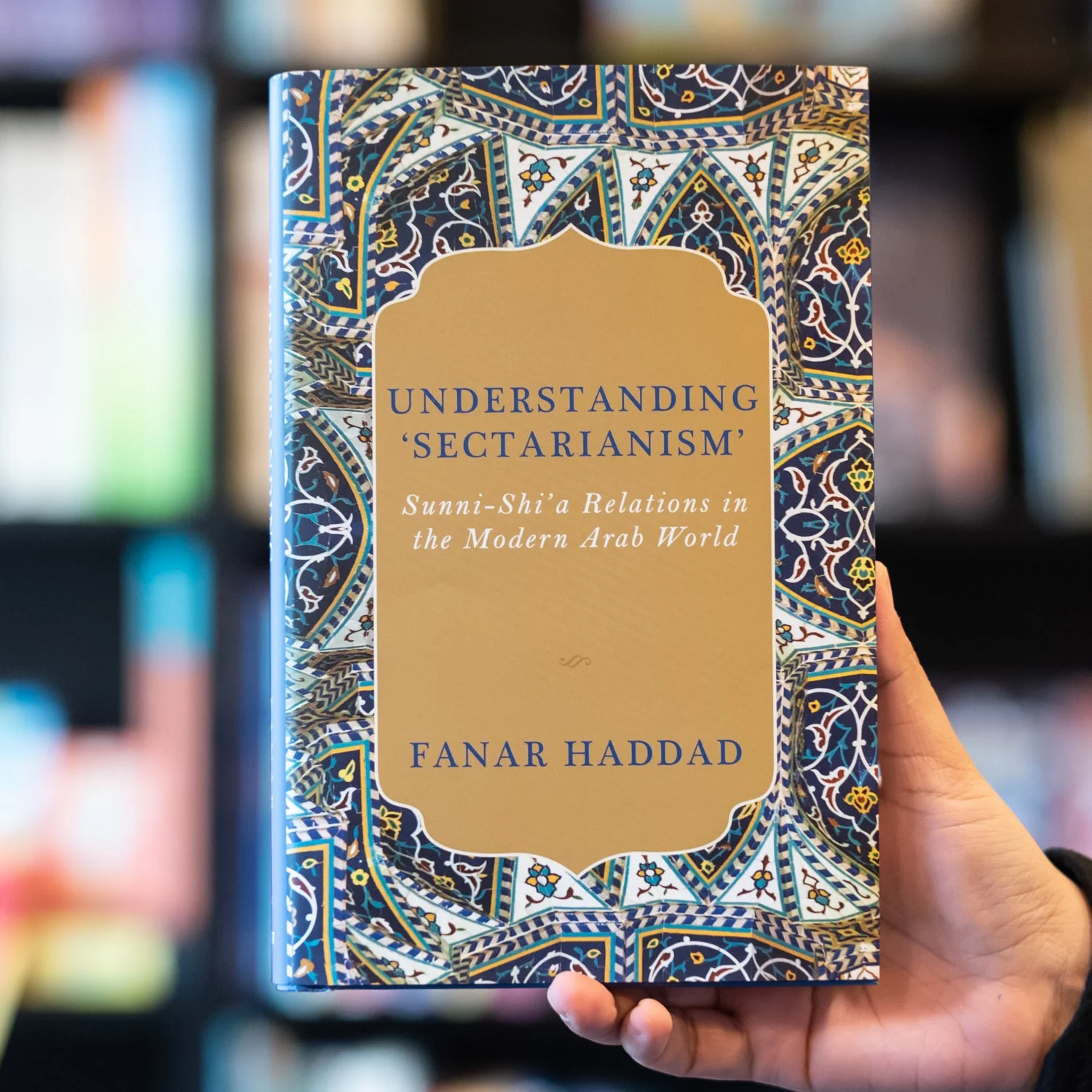
Understanding ‘Sectarianism’
Fanar Haddad
Hardback
9781787382060
Sunni–Shi’a Relations in the Modern Arab World
Much has been published on sectarianism in the Middle East but few writers have separated received wisdom from the facts, as Haddad does in this book.
This book seeks to move the study of modern sectarian dynamics beyond these analytically paralysing dichotomies by shifting the focus away from the meaningless ‘-ism’ towards the root: sectarian identity. How are Sunni and Shi’a identities imagined, experienced and negotiated and how do they relate to and interact with other identities?
Looking at the modern history of the Arab world, Haddad seeks to understand sectarian identity not as a monochrome frame of identification but as a multi-layered concept that operates on several dimensions: religious, subnational, national and transnational. Far from a uniquely Middle Eastern, Arab, or Islamic phenomenon, a better understanding of sectarian identity reveals that the many facets of sectarian relations that are misleadingly labelled ‘sectarianism’ are echoed in intergroup relations worldwide.
Product Information
Product Information
Shipping & Returns
Shipping & Returns
Description
Fanar Haddad
Hardback
9781787382060
Sunni–Shi’a Relations in the Modern Arab World
Much has been published on sectarianism in the Middle East but few writers have separated received wisdom from the facts, as Haddad does in this book.
This book seeks to move the study of modern sectarian dynamics beyond these analytically paralysing dichotomies by shifting the focus away from the meaningless ‘-ism’ towards the root: sectarian identity. How are Sunni and Shi’a identities imagined, experienced and negotiated and how do they relate to and interact with other identities?
Looking at the modern history of the Arab world, Haddad seeks to understand sectarian identity not as a monochrome frame of identification but as a multi-layered concept that operates on several dimensions: religious, subnational, national and transnational. Far from a uniquely Middle Eastern, Arab, or Islamic phenomenon, a better understanding of sectarian identity reveals that the many facets of sectarian relations that are misleadingly labelled ‘sectarianism’ are echoed in intergroup relations worldwide.