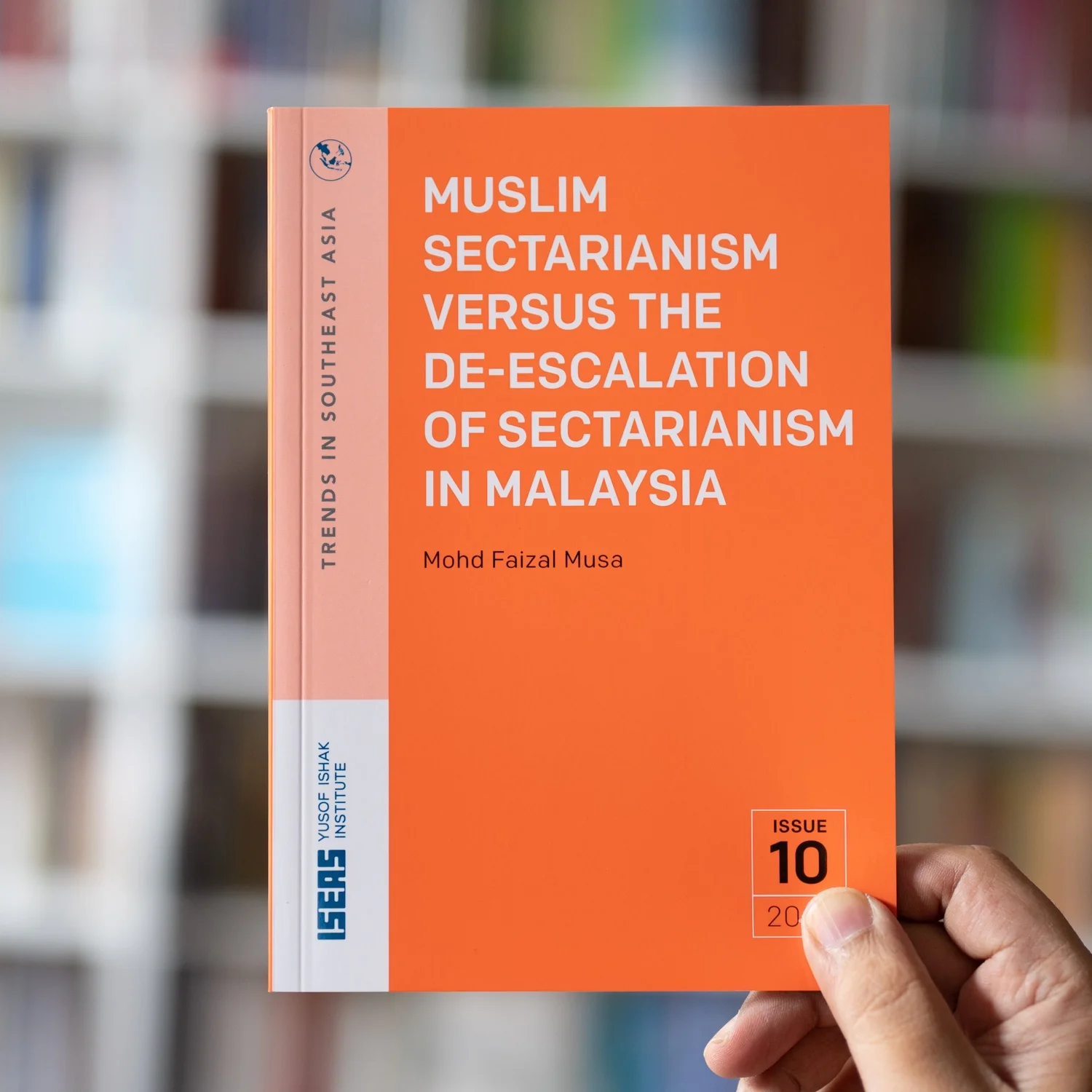
Muslim Sectarianism versus the De-escalation of Sectarianism in Malaysia
Mohd Faizal Musa
Paperback, 64 pages
9789815011562
In 1992, a group of academics at the National University of Malaysia (UKM) organized a seminar titled “Seminar Ahli Sunnah dan Syiah Imamiyyah” (“Seminar on Ahl al-Sunnah and Imami Shi’ism”) in Kuala Lumpur. It aimed to demonize Shi’a Muslims and ban Shi’ism, effectively escalating sectarianism in Muslim society.
A Deobandi presenter at the seminar by the name of Muhammad Asri Yusoff put forth arguments about Shi’ism, which later became the “intellectual base” for the discrimination and repression of Shi’a Muslims by Islamic authorities in Malaysia. This repression continues till the present day, and other religious leaders—particularly those with a Salafi orientation—take part in this.
While much attention has been given to those who have escalated sectarianism, there have also been efforts to de-escalate sectarianism. These efforts come from groups such as Persatuan Ulama Malaysia, and individuals such as Abdul Hadi Awang of PAS, former Prime Minister Mahathir Mohamad, the leader of International Movement for a Just World, Chandra Muzaffar, as well as Malaysian academic, Syed Farid Alatas.
Nevertheless, the roots of sectarianism have been deeply laid since the seminar in 1992. Unsurprisingly, the sectarian campaign against Shi’as is aligned with the agenda of extremist and terrorist organizations such as ISIS. The sectarian campaign thus arguably emboldens such groups and puts Malaysia and the entire Southeast Asia at risk.
Original: $7.65
-70%$7.65
$2.29Product Information
Product Information
Shipping & Returns
Shipping & Returns
Description
Mohd Faizal Musa
Paperback, 64 pages
9789815011562
In 1992, a group of academics at the National University of Malaysia (UKM) organized a seminar titled “Seminar Ahli Sunnah dan Syiah Imamiyyah” (“Seminar on Ahl al-Sunnah and Imami Shi’ism”) in Kuala Lumpur. It aimed to demonize Shi’a Muslims and ban Shi’ism, effectively escalating sectarianism in Muslim society.
A Deobandi presenter at the seminar by the name of Muhammad Asri Yusoff put forth arguments about Shi’ism, which later became the “intellectual base” for the discrimination and repression of Shi’a Muslims by Islamic authorities in Malaysia. This repression continues till the present day, and other religious leaders—particularly those with a Salafi orientation—take part in this.
While much attention has been given to those who have escalated sectarianism, there have also been efforts to de-escalate sectarianism. These efforts come from groups such as Persatuan Ulama Malaysia, and individuals such as Abdul Hadi Awang of PAS, former Prime Minister Mahathir Mohamad, the leader of International Movement for a Just World, Chandra Muzaffar, as well as Malaysian academic, Syed Farid Alatas.
Nevertheless, the roots of sectarianism have been deeply laid since the seminar in 1992. Unsurprisingly, the sectarian campaign against Shi’as is aligned with the agenda of extremist and terrorist organizations such as ISIS. The sectarian campaign thus arguably emboldens such groups and puts Malaysia and the entire Southeast Asia at risk.