
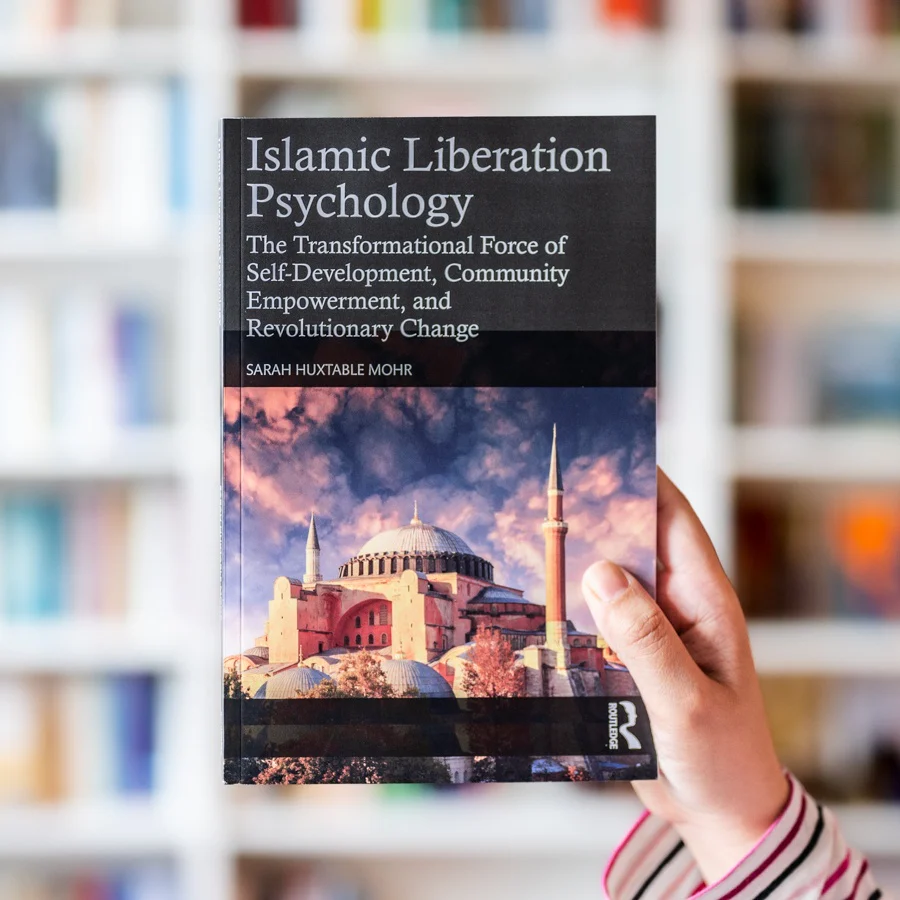
Islamic Liberation Psychology
Sarah Huxtable Mohr
Paperback, 176 pages
9781032625003
The Transformational Force of Self-Development, Community Empowerment, and Revolutionary Change
Islamic Liberation Psychology is a thoughtful and groundbreaking guide to liberatory and decolonial thought. The book has a wide range of uses, from individuals seeking self-development, to community organizers, to change makers generally. Chapters explore liberation psychology from an Islamic perspective and use autoethnography to frame the theory and make it more relevant and applicable.
This book makes a substantial contribution to a greater understanding of a variety of topics including anti-racism, feminism, utopianism, community development, arts and creativity, and other topics central to Islamic liberation psychology.
Contents
Introduction
1. The Theoretical Basis: De-ideologizing Reality
2. The Theoretical Goal: Utilizing the Virtues of the People
3. Self-Development: The Private
4. Community Empowerment: The Public
5. Revolutionary Change: The Commons Conclusion: Historical Memory and Utopian Vision
Original: $66.34
-70%$66.34
$19.90Product Information
Product Information
Shipping & Returns
Shipping & Returns
Description
Sarah Huxtable Mohr
Paperback, 176 pages
9781032625003
The Transformational Force of Self-Development, Community Empowerment, and Revolutionary Change
Islamic Liberation Psychology is a thoughtful and groundbreaking guide to liberatory and decolonial thought. The book has a wide range of uses, from individuals seeking self-development, to community organizers, to change makers generally. Chapters explore liberation psychology from an Islamic perspective and use autoethnography to frame the theory and make it more relevant and applicable.
This book makes a substantial contribution to a greater understanding of a variety of topics including anti-racism, feminism, utopianism, community development, arts and creativity, and other topics central to Islamic liberation psychology.
Contents
Introduction
1. The Theoretical Basis: De-ideologizing Reality
2. The Theoretical Goal: Utilizing the Virtues of the People
3. Self-Development: The Private
4. Community Empowerment: The Public
5. Revolutionary Change: The Commons Conclusion: Historical Memory and Utopian Vision